Age-related decline or chronic illness
Most families first notice something is wrong through small daily struggles rather than a single crisis: a parent skips showers, loses weight because cooking has become hard, or takes twice as long to get dressed. These are signs of difficulty with the activities of daily living — bathing, dressing, mobility, toileting, and eating — that agencies and clinicians use as the baseline for deciding what paid help is actually needed, a framework described in general terms by MedlinePlus's overview of home care services.
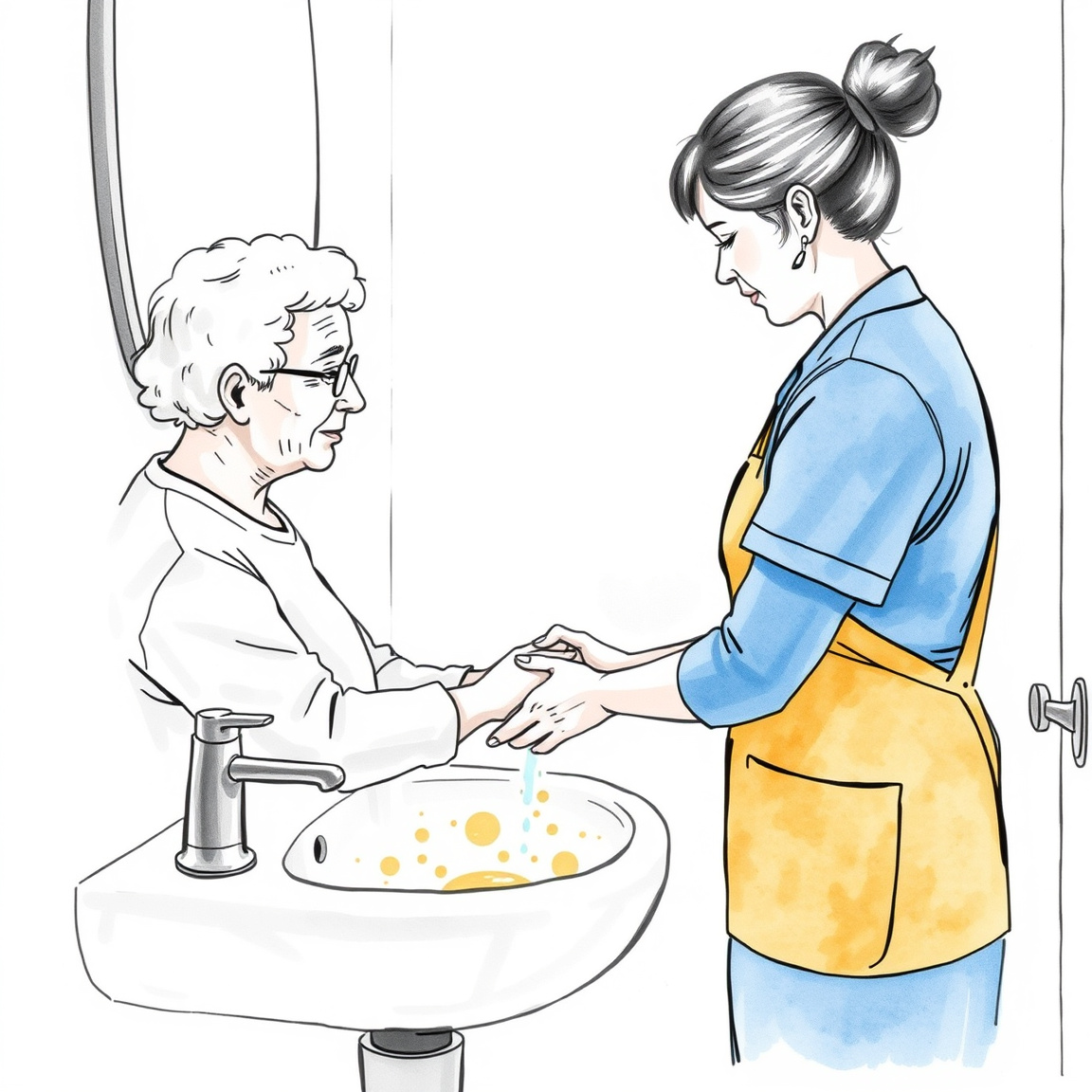
The practical next step is a care needs assessment, usually done by an agency intake coordinator or a discharge planner, that maps each ADL limitation to a task and a time. Someone who needs help showering and dressing each morning but manages independently the rest of the day might need two or three hours daily. Someone who also needs meal preparation, medication reminders, and evening supervision needs a longer block. This is how a vague sense that "Mom needs help" becomes a defined schedule of personal care services — hands-on assistance with bathing, dressing, toileting, and transferring — billed hourly rather than guessed at.
Dementia diagnosis
A dementia diagnosis changes the calculation because the risk isn't just physical frailty, it's unsafe judgment: wandering, leaving the stove on, or not recognizing that it's night. The Alzheimer's Association's guidance on in-home care notes that care should be adapted to the stage of the disease, with routines, communication style, and supervision level all changing as cognition declines.
Hourly visits work in the earlier stages, when a person is safe alone between visits and simply needs help with specific tasks. That stops being true once wandering, aggression, or confusion at night become regular events — at that point, the honest options are 24-hour in-home coverage (either around-the-clock shifts or a live-in arrangement) or a move to a residential memory care setting. Families often delay this decision because it feels like giving up, but the deciding question is narrow and practical: can the person be safely alone for any part of the day or night? If the answer is no, hourly care is no longer solving the actual problem, and the number of paid hours needed rises sharply, which is one of the biggest drivers of monthly cost.
Family member providing unpaid care
It's common for one relative to end up doing the bulk of a person's care — arranging appointments, managing medication, and providing hands-on help — with none of it built into a schedule with breaks. That pattern doesn't resolve itself; it tends to escalate quietly until the caregiver is exhausted.
Signs of caregiver strain worth naming plainly:
- Chronic fatigue or sleep loss tied directly to caregiving duties, not general tiredness
- Irritability or resentment toward the person being cared for, or withdrawal from friends and one's own activities
- Neglect of the caregiver's own health — skipped medical appointments, weight change, or new anxiety and depressive symptoms
The service to ask for at this point is respite care: short-term paid coverage, booked through a home care agency, that lets the family caregiver take a planned break — an afternoon, a weekend, or longer — without the person going without supervision. Respite isn't a sign that unpaid caregiving has failed; it's what allows it to continue at all rather than ending abruptly when the caregiver reaches a breaking point.
Need for help at home
Before pricing anything out, the first question to answer is whether the need is skilled or non-medical, because that distinction decides who pays and how much a family should expect to budget. Skilled home health care — wound care, physical therapy, skilled nursing tasks — is clinically supervised and ordered by a physician. Non-medical in-home care — bathing, dressing, meal preparation, companionship, light housekeeping — is not a medical service at all.
MedlinePlus's overview of home care services draws this line directly: short-term, physician-ordered skilled home health visits are the kind of care that government health insurance programs are built to cover, while the ongoing personal care, homemaker, and companion help most families need month to month falls outside that coverage and is instead paid for privately, through long-term care insurance, or through a state Medicaid program for those who qualify financially. That means the Medicare question has a clean answer for most callers: it pays for the narrow, clinical slice of home care, not the daily bathing, dressing, and supervision help that is usually what's being asked for.
Because non-medical care is private pay in most cases, the budgeting question isn't "what will insurance cover" but "how many hours, at what rate, for how long." Costs are set per hour by the individual agency or worker, rise with the number of hours per day, and rise again if care moves from a few daytime visits to overnight or live-in coverage — a live-in arrangement is billed as a daily or weekly rate rather than a simple multiple of an hourly one, since it includes room and food in addition to wages. A family weighing four hours a day of bathing and meal help against sixteen hours of near-continuous supervision is really comparing two different billing structures, not just two numbers on the same scale, which is why a written, itemized quote from a licensed provider matters more than any general figure.
Caregiver
The caregiver is the person actually in the home — an aide who bathes, dresses, cooks, drives to appointments, or simply keeps someone company, paid either hourly or as a live-in employee. Caregivers can be hired two ways, and the difference changes who is responsible when something goes wrong, and often what the family ends up paying.
| Agency-employed caregiver | Independently hired caregiver | |
|---|---|---|
| Employer of record | The home care agency | The family |
| Background screening | Agency-run, typically standardized | Family's responsibility to arrange |
| Backup coverage if caregiver is sick | Agency supplies a replacement | Family must find one |
| Liability and workers' comp insurance | Usually carried by the agency | Usually the family's obligation |
| Rate structure | Hourly rate reflects agency overhead, screening, and backup cover | Hourly rate paid directly to the worker, with fewer built-in protections |
State health departments regulate licensed home care agencies and set standards for screening and supervision, as described in New York State's consumer guide to home care and in Pennsylvania's Department of Health home care program page, which is one reason families weighing cost against risk often choose an agency despite paying more per hour for the same tasks.
In-home care
In-home care is the umbrella term for non-medical support delivered in a person's own home rather than a facility — the core service most families mean when they search for help. Wikipedia's overview of home care describes it as encompassing personal care, homemaker and companion services, and supervision, distinguished from home health care by the absence of a clinical or skilled-nursing component. It is generally billed hourly, with rates and minimum shift lengths set by individual providers rather than a single national schedule.
Within that umbrella, homemaker and companion services cover the non-hands-on side of the work: housekeeping, laundry, meal preparation, running errands and grocery shopping, and social companionship — conversation, accompaniment to appointments, and simply not leaving someone alone all day. This is distinct from personal care, which covers touching-the-body tasks like bathing and dressing. A person who is physically capable but isolated or no longer driving may need only homemaker and companion hours; someone who needs help showering needs personal care regardless of how independent they otherwise are — and most schedules end up combining both once needs move past the earliest stage.
Home health care
Home health care is the skilled, clinically supervised counterpart to in-home care: nursing visits, physical or occupational therapy, and wound care ordered by a physician and typically time-limited, as opposed to the ongoing, non-clinical support most people need for daily living. New York's consumer guide separates licensed home care services agencies, which provide the non-medical kind, from certified home health agencies, which provide the skilled kind — a distinction worth confirming before assuming any given provider covers both, and before assuming a given cost will be reimbursed rather than billed privately.
Personal care services
Personal care services are the hands-on tasks within in-home care — bathing, dressing, toileting, transferring, and mobility assistance — the tasks tied most directly to ADL limitations. These are usually the first services added once a person can no longer manage independently, and the hours needed for them form the starting point of the schedule an agency will quote and price.
Once you know whether the need is skilled or non-medical, and roughly how many hours of personal care and companion support the ADLs require, the next concrete step is calling a licensed agency directly for a written, itemized quote rather than budgeting from a guess.