Age-related decline or chronic illness
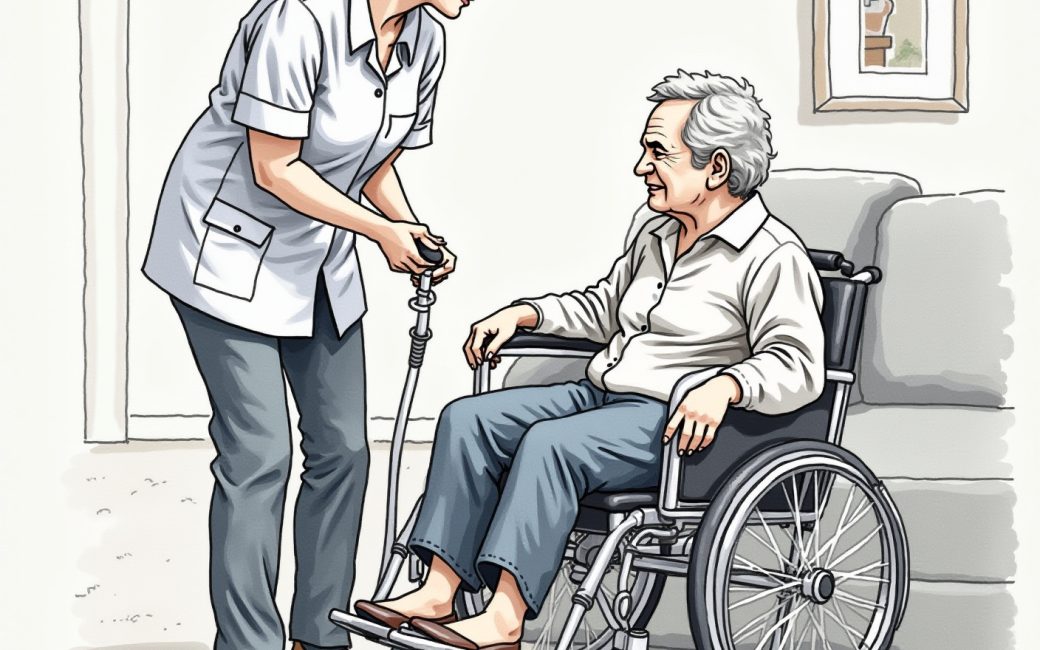
The first sign that home care might be needed is usually small: a parent skips showers, loses weight because cooking has become hard, or misses medication doses. These are markers of difficulty with the basic tasks of daily living — bathing, dressing, transferring in and out of a chair, moving safely around the house — rather than a medical emergency, and they call for a different response than a hospital stay would.
The practical next step is a needs assessment that maps what the person can no longer do safely alone against a schedule of paid support. MedlinePlus describes home care services as covering exactly this range: help with personal care, meal preparation, light housekeeping and transportation, delivered on the hours the family and the person actually need rather than around the clock. A family that identifies two or three specific ADL gaps — help getting into the shower each morning, supervision at meal times — can usually convert that into a defined block of hours per week, which is the starting unit for comparing what in-home support will cost against a residential alternative.
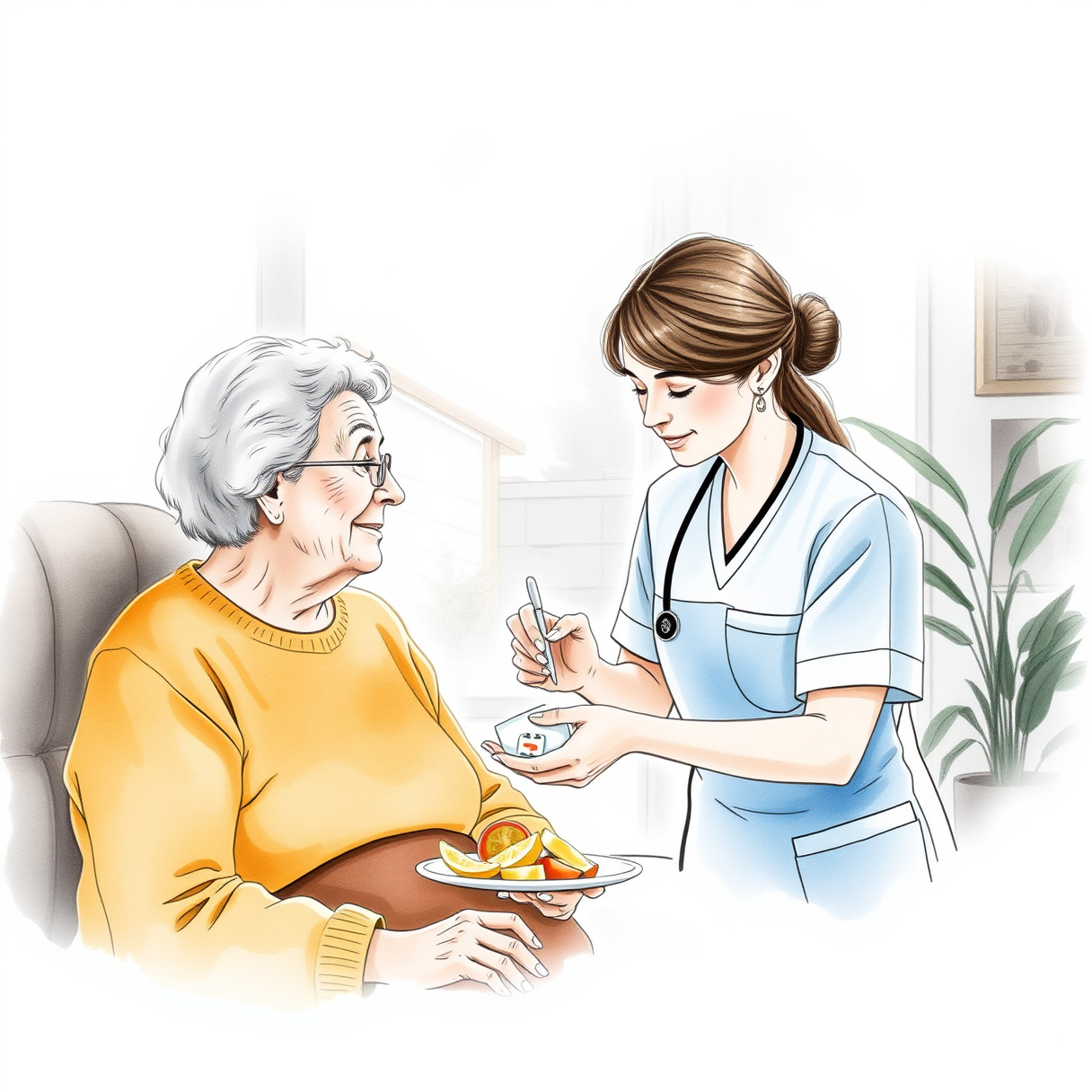
Dementia diagnosis
A dementia diagnosis changes the calculation because the risk is not only physical but behavioural — wandering, disorientation, leaving the stove on — and it tends to worsen over time rather than staying at a fixed level. The Alzheimer's Association notes that in-home care for someone with dementia can range from a few hours of respite a week to full-time live-in support, and that the right level depends on how much supervision the person needs to stay safe, not only on how much personal care they need.
This is the point at which hourly visits often stop being enough. A caregiver who comes for four hours in the afternoon cannot address a 2 a.m. wandering episode, so families with a diagnosis that includes unsafe-alone behaviour typically move toward 24-hour or live-in coverage rather than adding more scattered hourly shifts. That shift changes the cost comparison significantly: hourly care priced per visit becomes a flat daily or weekly live-in rate, and at that point the monthly cost of in-home care starts to close the gap with residential memory care rather than staying clearly cheaper.
Family member providing unpaid care
Most home care in the United States is still delivered unpaid, by a spouse or adult child, and that arrangement is the one most likely to fail quietly through exhaustion rather than through any single crisis. Unpaid caregivers who get no scheduled break are at higher risk of the fatigue and health decline sometimes called caregiver burnout, and the practical fix is not encouragement to cope better but a specific service: respite care.
Respite care booked through an agency is a defined block of hours or days in which a paid caregiver takes over so the family caregiver can rest, travel, or simply sleep through the night. Nevada Caregivers lists respite as a distinct category of in-home service rather than an add-on, which reflects how agencies actually schedule it — as a booked, recurring slot rather than a one-off. Families who build respite into the weekly plan from the start tend to sustain unpaid caregiving for longer than those who only look for it after a crisis.
Need for help at home
The single most consequential mistake families make about cost is assuming Medicare will pay for ongoing help at home. It will not, in most cases, and the distinction that determines the answer is whether the care is skilled or non-medical.
Medicare covers home health care — skilled nursing, physical therapy, and similar services ordered by a doctor — but only for a limited, medically justified period. MedlinePlus draws this line clearly: home health care is clinical and time-limited, while non-medical in-home care — bathing, dressing, companionship, housekeeping — is not a Medicare benefit at all. That non-medical category is paid for privately, through long-term care insurance, or in some states through Medicaid waiver programs. Anyone budgeting for ongoing personal care or companionship should plan on private-pay hourly rates rather than expecting Medicare to offset them, and should check state Medicaid waiver eligibility separately if income is limited.
In-home care
In-home care is non-medical support delivered in the person's own home, and it is the core service this whole comparison rests on. It covers help with personal care, meals, light housekeeping, transportation and companionship, scheduled by the hour, by the day, or as live-in coverage.
Because it is billed by the hour rather than as a flat monthly fee, in-home care scales directly with need: a person who needs four hours a day costs roughly half of what a person needing eight hours a day costs, all else equal, which is not true of a residential facility where the daily rate is largely fixed regardless of how much staff time an individual resident actually uses. That flexibility is the main argument for in-home care at low-to-moderate hours, and the main reason it can become more expensive than a care home once hours climb toward round-the-clock coverage.
Caregiver
The caregiver is the paid worker who actually delivers in-home services, and how that person is hired changes both cost and risk. Families choose between hiring through an agency or hiring an independent caregiver directly, and the two paths differ on more than price.
| Factor | Agency-employed caregiver | Independently hired caregiver |
|---|---|---|
| Screening | Background checks and training handled by the hiring organisation | Family must vet references and history itself |
| Insurance and liability | Hiring organisation typically carries liability coverage | Family may need its own coverage |
| Backup cover | Hiring organisation supplies a replacement if the caregiver is sick | No automatic backup; care gap if caregiver is unavailable |
| Who is the employer | The home care agency, for payroll and tax purposes | The family, with associated tax and payroll duties |
| Hourly rate | Usually higher, reflecting agency overhead | Usually lower, but with more responsibility on the family |
Visiting Angels frames agency staffing as built around exactly this trade-off: paying more per hour buys screening, supervision and a guaranteed replacement, while hiring independently shifts those responsibilities, and their cost, onto the family.
Home health care
Home health care is skilled, clinically supervised care delivered at home — nursing, wound care, physical or occupational therapy — ordered by a physician, and it is distinct from the non-medical support described above. It is short-term by design, tied to a specific medical condition or recovery period rather than to ongoing daily living needs.
Because it is clinical, home health care is the one part of this comparison that Medicare does reliably cover, subject to physician certification and eligibility criteria described by MedlinePlus. Families sometimes conflate a home health nurse's visit with the ongoing companion or personal care they actually need once recovery ends — the two are billed, staffed and covered on entirely different terms.
Personal care services
Personal care services are the hands-on tasks of bathing, dressing, toileting and mobility assistance that most closely track the ADL gaps identified in an assessment. This is usually the largest hourly cost driver within non-medical in-home care, because it requires a caregiver present and actively assisting rather than simply supervising.
Personal care is typically billed at the same hourly rate as companion care by most agencies, but families needing it tend to need more hours per visit, which is what actually drives the monthly total up — the rate stays flat, the hours climb.
Homemaker and companion services
Homemaker and companion services cover housekeeping, meal preparation, errands and social company, and they are usually the lowest-intensity, lowest-cost tier of in-home support. A person who is physically capable but isolated or forgetful about meals may need only this level, without personal care at all.
A Place for Mom describes this tier as the entry point many families use before care needs escalate, and it is worth reassessing regularly rather than assuming the same few hours a week will remain sufficient. Book a formal needs assessment before committing to a schedule, and revisit it every few months — that single habit is what keeps a cost comparison between home care and a care home accurate as needs change.