A diet built on refined grains and few vegetables supplies calories with little fiber or micronutrients
White bread, sugary cereal, and pastries made from refined flour supply energy without much else. Refining strips the bran and germ from grain, and the bran is where most of the fiber lives, along with a good share of the B vitamins and minerals — a distinction the Harvard T.H. Chan School of Public Health's Nutrition Source draws out when explaining why whole grains and refined grains behave differently in the body.
A pattern low in fiber and low in nutrient density doesn't announce itself as a problem the way a single bad meal might. It shows up gradually — in blood sugar swings, in sluggish digestion, in the diet quality scores researchers use to track long-term risk. The same body of evidence links low-fiber, low-vegetable eating patterns to higher rates of chronic disease, heart disease among them.
The fix isn't a diet overhaul. It's a swap: replace refined grains with whole grains, and add vegetables, fruit, or beans to meals that currently lack them. That single substitution moves more of the needle on long-term disease risk than most people expect, because it's repeated at every meal, every day, rather than attempted once and abandoned.
What makes a food "high fiber" — and how much you actually need
A food earns a "high fiber" label when a single serving supplies a meaningful share of the day's target, not just a trace amount. The NHS recommends adults aim for around 30g of fiber a day, a target most adults in the UK and US fall well short of. Hitting it usually means combining several fiber sources across the day rather than relying on one large serving.
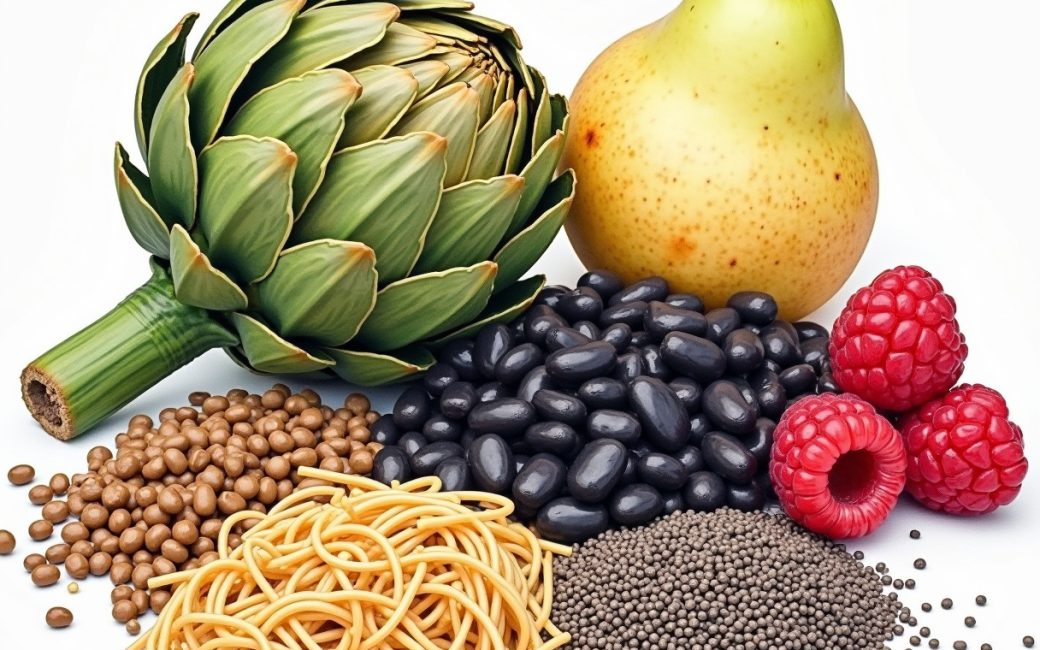
The eight foods below were chosen because a single realistic serving of each supplies 5g or more of fiber — roughly a sixth of the daily target in one sitting. That's the criterion: fiber per stated serving, not fiber per 100g of a food nobody eats in 100g amounts, and not a vague "portion." Serving sizes below follow the amounts used in the Mayo Clinic's chart of high-fiber foods.
Eight foods with 5g or more fiber per serving
| Food | Serving | Fiber | Who should be cautious |
|---|---|---|---|
| Lentils (cooked) | 1/2 cup | ~8g | Low-FODMAP diets, sudden increases in anyone unused to legumes |
| Split peas (cooked) | 1/2 cup | ~8g | Same as lentils — introduce gradually to avoid bloating |
| Black beans (cooked) | 1/2 cup | ~7g | People on potassium restriction for kidney disease should check portion with a dietitian |
| Artichoke (cooked, whole) | 1 medium | ~7g | None significant at normal intake |
| Raspberries | 1 cup | ~8g | None significant at normal intake |
| Pear (with skin) | 1 medium | ~6g | None significant at normal intake |
| Whole wheat spaghetti (cooked) | 1 cup | ~6g | Wheat allergy or coeliac disease |
| Chia seeds | 2 tablespoons | ~10g | Should be taken with adequate fluid; large amounts can affect medication absorption timing |
These figures are drawn from the Mayo Clinic fiber chart and broadly match the ranges given by Healthline's review of high-fiber foods, though exact values shift a little depending on variety and preparation — a cooked lentil measured before versus after cooking will read very differently, for instance.
A few notes on the list worth stating plainly rather than leaving implied:
- Legumes (lentils, split peas, black beans) are the densest fiber sources on a per-calorie basis, but they also raise gas and bloating in people who don't eat them regularly; increasing intake gradually over a couple of weeks, with adequate water, is the usual advice.
- Fruit with skin on (pear, raspberries) loses a meaningful share of its fiber if peeled or juiced — the fiber sits largely in the skin and pulp, not the juice.
- Whole grains (whole wheat pasta) only count if the label says "whole wheat" or "whole grain" as the first ingredient; "wheat flour" alone is usually refined flour.
- Chia seeds deliver more fiber per tablespoon than almost anything else on this list, but the serving size is small and easy to overlook when planning meals around it.
One banana, by comparison, supplies roughly 3g of fiber — useful, but on its own it won't get an adult close to the 25–30g daily range recommended by NHS guidance; it needs to be paired with a legume, a whole grain, or another high-fiber fruit or vegetable across the same day.
Individual healthy foods do not guarantee a healthy diet if proportions are wrong
A cup of lentils at dinner doesn't offset a day otherwise built on white bread and processed snacks. Fiber-rich foods work as part of a pattern, and the pattern is what the evidence actually measures — not any single food in isolation.
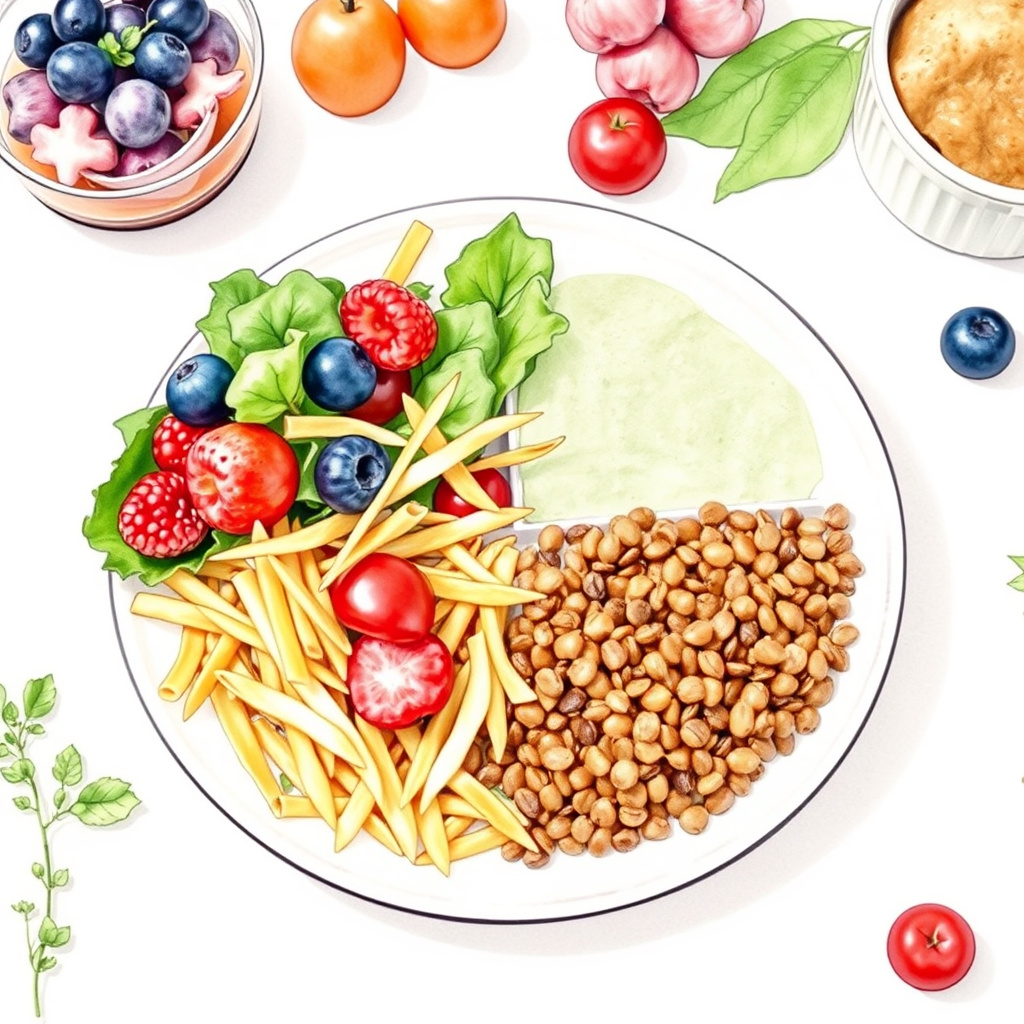
A practical way to check proportions at the plate level, rather than trying to track grams across a whole day, is the Healthy Eating Plate model from Harvard's Nutrition Source: roughly half the plate as vegetables and fruit, a quarter as whole grains, and a quarter as protein, with beans and lentils counted toward either the protein or vegetable portion depending on the meal. Used this way, a meal built around lentils and a whole grain naturally lands in the right proportions without needing a calculator.
Total calories still matter alongside the proportions. Piling on fiber-dense foods without regard for portion size or overall energy intake doesn't automatically translate to better outcomes — the plate model is a proportion check, not a license to eat unlimited amounts of any one food group.
Fiber, heart disease, and what to watch for
Fiber's link to heart disease is one of the better-established findings in nutrition research, not a fringe claim. Soluble fiber — the type found in oats, beans, and fruit like pears and apples — binds to cholesterol-containing bile acids in the digestive tract and helps remove them, which is part of the mechanism the Nutrition Source cites when explaining why higher fiber intake tracks with lower LDL cholesterol and reduced cardiovascular risk over time.
That said, fiber isn't risk-free for everyone. People with inflammatory bowel disease flares, those recovering from bowel surgery, or anyone on a medically supervised low-residue diet may need to limit high-fiber foods temporarily, and should follow guidance from the clinician managing that condition rather than general dietary advice. People with chronic kidney disease also need to watch legumes specifically, since beans and lentils carry meaningful potassium alongside their fiber.
Start by adding one item from the table above to a meal already on this week's plan — a half-cup of lentils stirred into a soup, or a pear eaten with the skin on instead of peeled — and build from there rather than trying to restructure every meal at once.