A diet built on refined grains and few vegetables supplies calories with little fiber or micronutrients
White bread, sweetened cereal, pastries and soda deliver energy without much else: little fiber, few vitamins, and minerals in amounts too small to matter against the calorie load. That combination — calories high, nutrients low — is what nutrition researchers mean by low nutrient density, and it is the marker that distinguishes a poor diet from a merely indulgent meal now and then.
Diets built around refined grains and light on vegetables tend to run low on fiber as well as on the vitamins and minerals that come packaged with a plant food's own calories. The WHO's guidance on healthy diet links this pattern — low intake of fruit, vegetables and whole grains alongside high intake of saturated fat, free sugars and salt — to greater risk of heart disease, stroke, some cancers and type 2 diabetes over time.
None of that means any single refined-grain food is dangerous in isolation. It means the pattern, repeated across most meals over months and years, is what drives the risk. The fix that follows from this is not a diet overhaul but a swap: trade white rice for brown, white bread for whole-grain, and add a vegetable, a piece of fruit or a serving of beans wherever a meal currently has none. That single lever — swap, don't overhaul — moves disease risk more reliably than any short-term restriction, because it's sustainable enough to repeat.
Reader wants to know which foods are 'healthiest'
The honest answer is that no single food is healthiest in isolation — a food only earns that label relative to a criterion, usually nutrient density, meaning how much fiber, vitamins and minerals it supplies per calorie. Ranking fifty items by vague virtue, as several general lists do, tells a reader less than naming the criterion and picking a shorter set that meets it clearly.
A defensible short list looks at nutrient density within each food group rather than mixing groups into one ranked column. That is roughly how the Harvard Healthy Eating Plate frames it: vegetables and fruits, whole grains, and healthy protein sources, each doing a different nutritional job, not competing for the same rank.
A workable set of staples, one from each group:
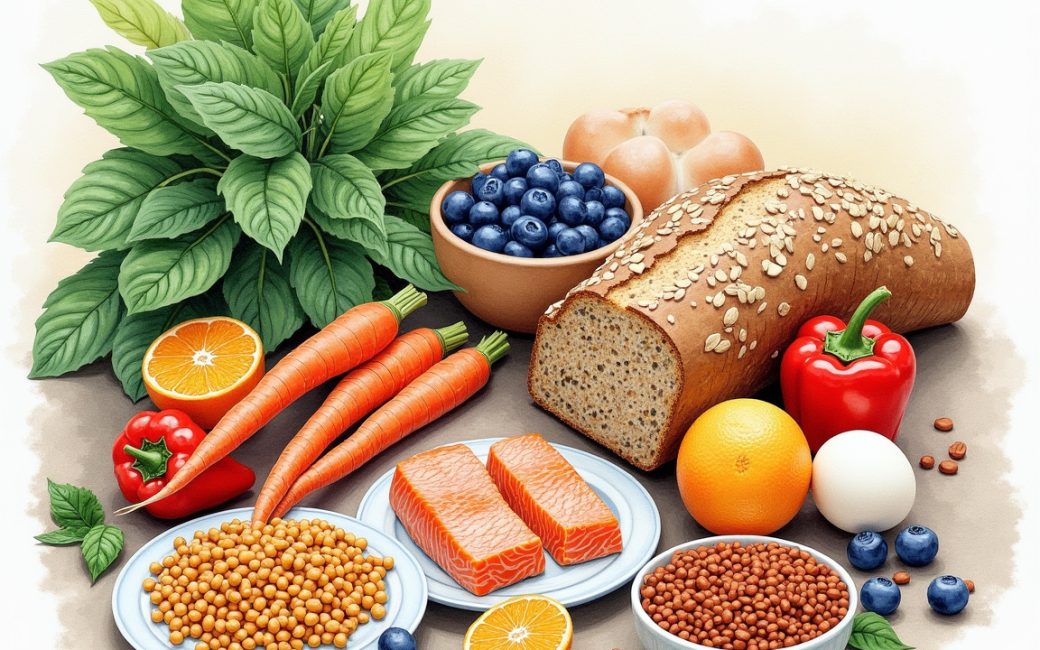
- Vegetables: leafy greens (spinach, kale) and orange/red vegetables (carrots, peppers) for fiber, vitamin A and vitamin C
- Fruits: berries and citrus for fiber and vitamin C with relatively low sugar load per serving
- Whole grains: oats, brown rice, whole wheat bread or pasta for fiber and B vitamins
- Beans and legumes: lentils, chickpeas, black beans for fiber and plant protein
- Lean protein: fish, eggs, poultry, and nuts or seeds for protein without excess saturated fat
Stocking a kitchen with these staples — the approach the American Cancer Society's kitchen guidance recommends — means a meal or a salad can be assembled from what's on hand rather than planned from scratch each time. That turns "what are the healthiest foods" into a repeatable shopping list instead of a one-off ranking to memorize.
Individual healthy foods do not guarantee a healthy diet if proportions are wrong
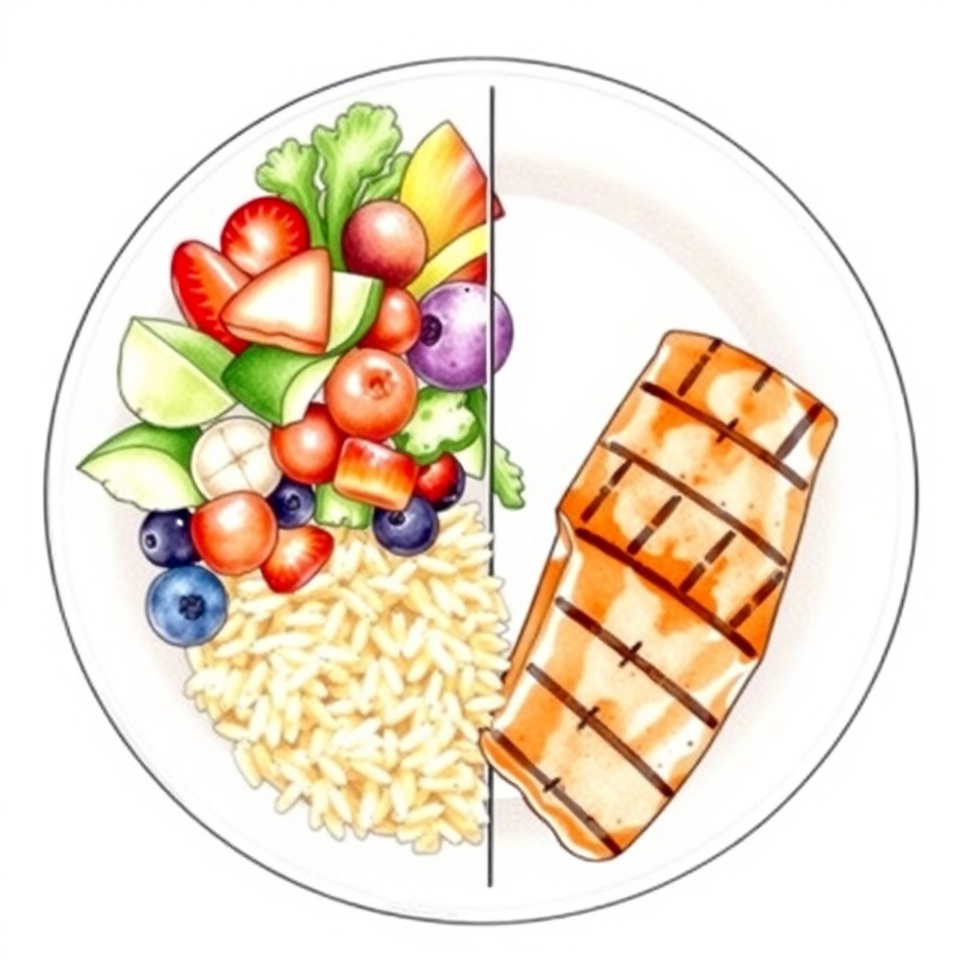
A plate can contain only foods drawn from that staples list and still be unbalanced if portions skew toward one group. A dinner of grilled salmon, a large serving of rice and no vegetable at all is built from "healthy foods" individually, but the proportions don't match what dietary guidance recommends for a meal.
The Harvard Healthy Eating Plate gives a concrete way to check this: fill about half the plate with vegetables and fruits, about a quarter with whole grains, and about a quarter with protein, with water as the primary drink. That proportion check works on any meal regardless of which specific foods are on it, which a food list by itself cannot provide.
Adjusting portions this way also keeps total calorie intake closer to what an individual actually needs, since vegetables and fruits add volume and fiber without adding much energy, leaving more room within a calorie budget for the grains and protein a meal also requires. Checking a plate against these proportions before checking whether each item is "healthy" catches the more common problem: a meal made entirely of good foods in a bad ratio.
Healthy diet pattern
A healthy diet pattern is the overall combination of foods eaten over time — days and weeks, not one meal — and it is a different question from whether any single food is healthy. A food list can flag good options; only a pattern, sustained, changes long-term health outcomes.
This distinction matters because the two are often blurred: an article will list individual foods, then jump to dietary advice, without stating that the list only matters if it adds up to a pattern. The WHO's healthy diet guidance frames its recommendations at the pattern level — proportions of fruit and vegetables, limits on free sugars, salt and saturated fat — specifically because single-food swaps only pay off when repeated across most meals, most days.
Practically, this means a "healthiest foods" list is a shopping aid, not a diet plan. The diet plan is what proportion of the week's meals actually draw from that list versus from refined grains, fried foods and sugary drinks.
Nutrient density
Nutrient density is the amount of vitamins, minerals, fiber and protein a food supplies relative to its calorie content, and it is the implicit criterion behind almost every "healthiest foods" ranking even when the ranking never states it. A food low in calories but rich in nutrients — spinach, for example — ranks higher on this measure than a food that is calorie-dense but nutrient-thin, even if the second food isn't unhealthy in the ordinary sense.
Nutrient density is also why serving size matters more than raw nutrient counts. A tablespoon of a nutrient-dense seed and a cup of a nutrient-dense vegetable both count, but the practical amount a person eats in a day, not the food's density alone, determines how much of that nutrient reaches them.
Because it is a ratio, nutrient density lets very different foods — a fish, a legume, a leafy green — be compared on the same footing, which is the only way a ranked list can be more than opinion.
Fruits
Fruits are usually recommended alongside vegetables rather than as a separate target, because both supply fiber, vitamins and minerals with relatively few calories per serving. Whole fruit — as opposed to fruit juice — also retains fiber that is otherwise lost in processing.
The pairing with vegetables in most dietary guidance reflects that fruits and vegetables together are the primary source of dietary fiber and several vitamins in most eating patterns, so advice tends to set a combined target for the two groups rather than separate ones. Berries, citrus and apples with skin intact are common choices precisely because the fiber sits in or near the skin and flesh eaten whole.
Frozen and canned fruit (without added sugar) retain most of the nutrient value of fresh, which matters for availability and cost as much as for nutrition — fresh produce is not always affordable or accessible year-round, and frozen is a reasonable substitute rather than a compromise.
Whole grains
Whole grains are grains that retain the bran and germ layers along with the starchy endosperm, which is what distinguishes them from refined grains where bran and germ have been milled away. That intact structure is where most of a grain's fiber, B vitamins and minerals are concentrated, so removing it in refining removes most of the nutritional advantage.
Brown rice, oats, whole wheat flour and barley are common whole-grain choices; white rice, white bread and most breakfast cereals made from refined flour are the refined-grain comparison. The practical swap — replacing refined grains with whole grains where a recipe allows it — is one of the more straightforward changes available, since it doesn't require adding a new food, only substituting the form of one already in regular use.
Reading a label for "whole wheat" or "whole grain" as the first ingredient is a more reliable check than color, since brown coloring can be added to refined flour without changing its fiber content.
Start by swapping one refined-grain staple already in the kitchen for its whole-grain equivalent this week, then build the vegetable and legume half of the plate around it.